
 +1 844-445-5767
 +971 56-848-5757
 +91 921-208-0630
For Business & Service Inquiries
Sales Team
Project quotes, partnerships, implementation
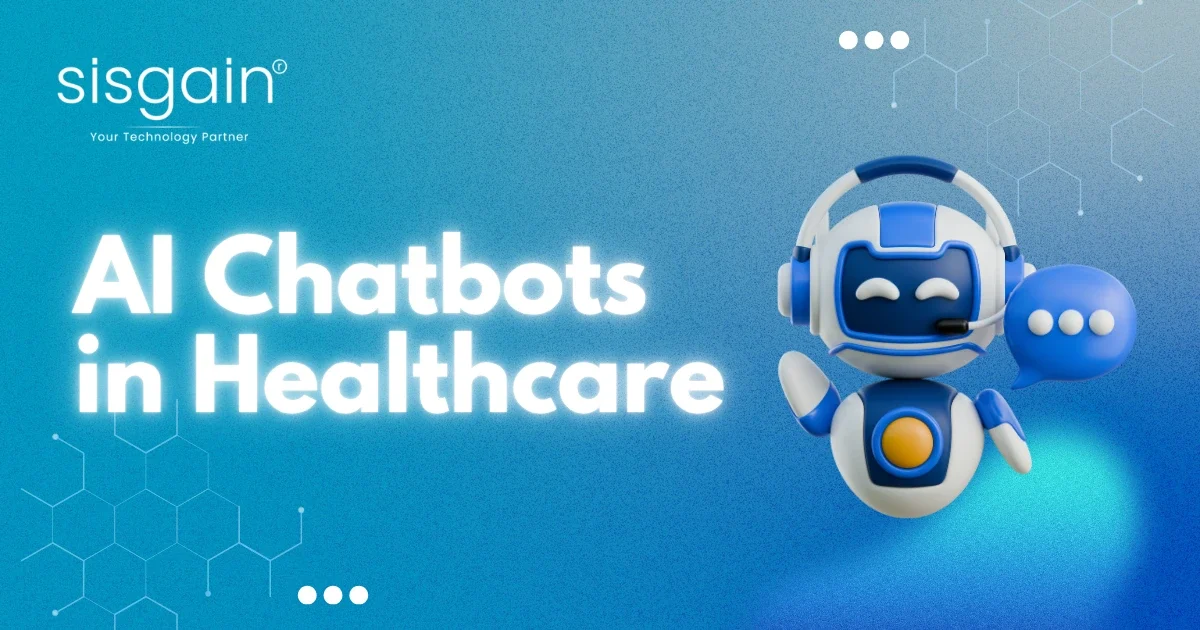
Healthcare systems across the globe are under increasing pressure. According to multiple industry reports, hospitals and clinics are experiencing a sharp rise in patient demand while facing a critical shortage of medical professionals. At the same time, administrative workloads continue to grow, consuming nearly 30–40% of healthcare staff time. This imbalance is not just an operational challenge—it is a direct threat to patient experience, revenue stability, and long-term scalability.
Patients today expect instant responses, seamless appointment booking, and continuous access to healthcare information. However, traditional systems struggle to keep up. Long wait times, delayed responses, and inefficient processes have become the norm. For healthcare startups and providers, this creates a dangerous gap between patient expectations and service delivery.
This is where ai chatbots in healthcare are emerging as a transformative solution. By automating repetitive tasks, enabling real-time communication, and improving access to care, chatbots in healthcare are redefining how providers interact with patients. They are not just tools for convenience—they are becoming essential infrastructure for modern healthcare delivery.
As part of broader advancements in AI-driven innovation, including AI in Healthcare and evolving AI trends, chatbots are positioning themselves as scalable, cost-efficient systems capable of supporting both clinical and administrative workflows. For investors and healthcare professionals, this shift represents not only a technological upgrade but a strategic opportunity to build more resilient and patient-centric systems.
An ai chatbot for healthcare is a software application designed to simulate human-like conversations with patients, caregivers, or healthcare professionals using artificial intelligence. Unlike traditional digital tools, these systems can understand, process, and respond to user queries in real time, making them highly effective for healthcare environments where speed and accuracy are critical.
A medical AI chatbot goes a step further by integrating domain-specific knowledge, enabling it to assist with symptom checking, medication reminders, appointment scheduling, and even mental health support. These solutions are increasingly being adopted by healthcare startups and enterprises to streamline operations and improve patient engagement.
At the core of healthcare chatbots are advanced technologies such as Natural Language Processing (NLP) and Machine Learning (ML). NLP allows the chatbot to interpret human language—whether typed or spoken—while machine learning enables it to improve over time based on user interactions and data patterns. This combination ensures that responses are not only accurate but also contextually relevant.
There are two primary types of chatbots used in healthcare:
Rule-based chatbots:
These operate on predefined scripts and decision trees. They are effective for handling simple queries such as appointment booking or FAQs but lack the ability to adapt beyond programmed scenarios.
AI-powered conversational agents:
These are more advanced systems capable of understanding intent, learning from interactions, and delivering personalized responses. They can handle complex queries, making them ideal for patient triage, health monitoring, and ongoing engagement.
For organizations looking to implement such solutions, leveraging expert-led AI development services is essential. A well-designed chatbot not only enhances operational efficiency but also ensures compliance with healthcare regulations, data security standards, and patient expectations.
As healthcare continues to evolve, AI chatbots are becoming a foundational component of digital transformation strategies, enabling smarter, faster, and more accessible care delivery.
The healthcare industry is at a critical inflection point. Demand for services is rising rapidly, but the capacity to deliver care is not keeping pace. This widening gap is creating both a challenge and a significant business opportunity—one that ai chatbots in healthcare are uniquely positioned to address.
One of the most pressing issues is the global shortage of doctors and healthcare professionals. Many systems are operating below optimal staffing levels, leading to increased workloads and longer patient wait times. This directly contributes to clinician burnout, which has become a major concern across hospitals and healthcare startups alike. Burnout not only affects staff retention but also impacts the quality of care delivered.
Operational inefficiencies further compound the problem. A large portion of healthcare workflows—such as appointment scheduling, patient queries, and follow-ups—remain manual or semi-automated. These inefficiencies result in:
At the same time, cost pressures are intensifying. Hospitals and startups must balance rising operational expenses with the need to deliver high-quality care. Traditional scaling methods—such as hiring more staff—are no longer sustainable.
Patient expectations are also evolving. Today’s users demand 24/7 access to healthcare services, instant responses, and personalized interactions. Any delay or friction in the patient journey can lead to dissatisfaction and loss of trust.
This is where chatbots in healthcare create a clear competitive advantage. By automating routine interactions and enabling real-time communication, they reduce operational strain while improving patient experience.
For organizations investing in advanced Healthcare IT solutions, AI chatbots are no longer optional—they are becoming a foundational component. They bridge the gap between limited resources and growing demand, enabling healthcare providers to scale efficiently without compromising quality.

The real value of a medical AI chatbot lies in its ability to solve practical, high-impact problems across the healthcare ecosystem. From patient engagement to operational efficiency, healthcare chatbots are being deployed in multiple areas to deliver measurable results.
Below are the most impactful use cases that healthcare startups, providers, and investors should understand:
AI chatbots can analyze patient symptoms and provide preliminary guidance based on predefined medical logic and data models.
Example: A patient inputs symptoms like fever and fatigue; the chatbot suggests possible causes and recommends next steps.
Manual scheduling is time-consuming and prone to errors. Chatbots streamline this process by handling bookings in real time.
Example: A patient books a consultation at midnight without needing staff intervention.
Ensuring patients follow prescribed treatments is a major challenge. Chatbots improve adherence through timely reminders and follow-ups.
Example: A diabetic patient receives daily reminders to take insulin and log blood sugar levels.
One of the fastest-growing applications of healthcare chatbots is in mental health.
Example: A chatbot engages users in conversation during anxiety episodes and suggests calming techniques.
For patients with long-term conditions, continuous monitoring is essential. AI chatbots assist in managing these conditions effectively.
Example: A hypertension patient logs daily readings, and the chatbot flags abnormalities for review.
Navigating healthcare billing can be complex. Chatbots simplify this by providing instant support.
Example: A patient quickly checks whether a procedure is covered under their insurance plan.
For organizations looking to implement these capabilities, investing in scalable chatbot development solutions is essential. The right implementation not only improves efficiency but also enhances patient satisfaction and long-term engagement.
These use cases clearly demonstrate that AI chatbots are not just a technological trend—they are a practical solution to some of healthcare’s most pressing challenges.
For healthcare startups, investors, and enterprise leaders, the adoption of an ai chatbot for healthcare is not just a technological upgrade—it is a strategic investment with measurable returns. As operational pressures rise and patient expectations evolve, ai chatbots in healthcare are proving to be a high-impact solution for both cost optimization and revenue growth.
One of the most immediate benefits is cost reduction through administrative automation. Tasks such as appointment scheduling, patient queries, and follow-ups can be handled without human intervention. This reduces dependency on large support teams and lowers operational overhead significantly.
At the same time, chatbots drive increased patient engagement. By offering instant, 24/7 responses, they ensure that patients remain connected with healthcare providers at every stage of their journey. Higher engagement leads to better retention, improved outcomes, and stronger brand trust.
Speed is another critical factor. Traditional systems often involve delays due to limited staff availability. In contrast, chatbots deliver real-time responses, improving patient satisfaction and reducing friction in the care process.
Missed appointments are a major source of revenue loss in healthcare. With automated reminders and confirmations, chatbots help reduce no-shows, ensuring better resource utilization and consistent revenue flow.
For startups, scalability is often a challenge. Hiring and training staff takes time and capital. Chatbots provide a scalable alternative, allowing organizations to handle thousands of interactions simultaneously without increasing costs proportionally.
Before Implementation:
After Implementation:
For organizations evaluating long-term growth, partnering with experienced AI development companies in USA or globally can accelerate deployment and ensure compliance with healthcare standards.
In a competitive market, the return on investment from healthcare chatbots is no longer theoretical—it is already being realized by forward-thinking organizations.
While the benefits are compelling, the adoption of chatbots in healthcare must be approached with careful consideration of risks and ethical implications. Addressing these concerns is essential to building trust and ensuring sustainable implementation.
One of the most critical challenges is data privacy and security. Healthcare data is highly sensitive, and any breach can have serious legal and reputational consequences. Regulations such as HIPAA and GDPR require strict compliance in how patient data is collected, stored, and processed. Chatbot systems must be designed with robust encryption, secure APIs, and clear data governance policies.
Another concern is AI bias and dataset limitations. Chatbots are trained on historical data, which may not always represent diverse populations accurately. This can lead to biased responses or recommendations, particularly for underrepresented groups. Ensuring inclusive and well-validated datasets is crucial for minimizing such risks.
The risk of misinformation is also significant. Unlike human professionals, chatbots may not always interpret complex medical scenarios correctly, especially if the input data is ambiguous or incomplete. Inaccurate responses can lead to poor decision-making by patients.
This is why human oversight remains essential. Chatbots should be positioned as assistive tools rather than replacements for healthcare professionals. They are highly effective in handling routine queries and processes, but complex diagnoses and critical decisions must always involve qualified medical experts.
Transparency is another key factor. Patients should be clearly informed when they are interacting with a chatbot and how their data is being used. This builds trust and ensures ethical usage of the technology.
In summary, while chatbots in healthcare offer significant advantages, their implementation must balance innovation with responsibility. Organizations that proactively address these challenges will be better positioned to deliver safe, reliable, and patient-centric solutions.

Building an ai chatbot for healthcare requires a structured, compliance-driven approach. For healthcare startups and enterprises, the goal is not just functionality—but reliability, security, and scalability. Below is a step-by-step framework to develop high-performing healthcare chatbots.
Start with a clear objective. Identify whether the chatbot will handle patient triage, appointment booking, mental health support, or administrative queries. A focused use case ensures faster development and better ROI.
Select technologies based on your use case:
The right AI model determines how accurately the chatbot interprets and responds to user input.
Healthcare chatbots must connect with existing systems such as:
Seamless API integration ensures real-time data exchange and a unified patient experience.
User experience is critical in healthcare. The chatbot interface should be:
A well-designed UI reduces friction and increases adoption rates.
Healthcare applications must comply with strict regulations:
Implement end-to-end encryption, secure authentication, and data access controls to protect sensitive patient information.
Before launch, conduct rigorous testing:
Post-deployment, continuous monitoring and updates are essential to maintain performance and compliance.
A typical healthcare chatbot tech stack includes:
To accelerate development and ensure scalability, businesses often partner with providers offering AI development services and specialized chatbot development solutions.
The evolution of ai chatbots in healthcare is accelerating, driven by advancements in AI, data analytics, and digital health infrastructure. For healthcare startups and investors, understanding future trends is key to staying ahead of the curve.
One of the most significant trends is the integration of AI chatbots with telemedicine platforms. This enables seamless patient journeys—from initial consultation to virtual doctor visits—without switching systems. Chatbots act as the first point of contact, improving efficiency and reducing wait times.
Another emerging trend is voice-enabled healthcare assistants. With the rise of smart devices, patients are increasingly interacting through voice commands. This is particularly beneficial for elderly users and those with limited digital literacy, making healthcare more accessible.
Personalization is also becoming a core focus. Advanced AI models can analyze patient history, behavior, and preferences to deliver tailored recommendations. This shift toward personalized AI healthcare enhances patient engagement and improves outcomes.
Security is being redefined through the combination of blockchain and AI. Blockchain ensures secure, tamper-proof data storage, while AI enables intelligent data processing. Together, they address critical concerns around data privacy and trust.
For businesses looking to stay aligned with evolving AI trends, investing in next-generation chatbot capabilities is no longer optional—it is a strategic necessity.
The rapid adoption of healthcare chatbots is not случай—it is driven by strong market fundamentals and clear business advantages. For investors and decision-makers, this space represents a high-growth opportunity with long-term potential.
The global healthcare AI market is expanding at a significant pace, with chatbots playing a central role in digital transformation. As demand for scalable and efficient solutions grows, organizations are prioritizing technologies that deliver both cost savings and improved patient experiences.
One of the key drivers is competitive advantage. Early adopters of chatbot technology are able to offer faster services, better engagement, and more efficient operations compared to traditional providers. This creates a strong differentiation in an increasingly competitive market.
Additionally, the benefits of early adoption extend beyond immediate gains. Businesses that invest in chatbot infrastructure today are better positioned to integrate future technologies such as advanced AI models, predictive analytics, and personalized healthcare systems.
For startups, chatbots provide a cost-effective way to scale operations without heavy investment in human resources. For enterprises, they enable optimization at scale while maintaining service quality.
In essence, the growing investment in healthcare chatbots is a reflection of their proven value. They are not just tools for automation—they are becoming a cornerstone of modern healthcare strategy.
The healthcare industry is undergoing a fundamental transformation—and ai chatbots in healthcare are at the center of this shift. From reducing operational costs and improving patient engagement to enabling scalable growth, the benefits are clear and measurable. For startups, investors, and healthcare providers, this is no longer an experimental technology—it’s a proven driver of efficiency and competitive advantage.
As patient expectations continue to rise and systems face increasing pressure, adopting an ai chatbot for healthcare is no longer optional. It is a strategic necessity for organizations that want to stay relevant, responsive, and resilient in a rapidly evolving market.
The opportunity is significant—but execution is everything.
At SISGAIN, we specialize in building intelligent, secure, and scalable solutions tailored for the healthcare industry. Whether you're looking to enhance your Healthcare IT solutions or leverage advanced AI development services, our team brings the expertise needed to turn your vision into reality.

Ready to transform your healthcare operations?
Partner with SISGAIN to build next-generation healthcare chatbot solutions that drive real business outcomes.
Book your consultation today and take the first step toward AI-powered healthcare innovation.


Start Build Your
Next Digital Solution?
Let’s build scalable, future-ready digital solutions tailored to your business goals. Connect with our experienced technology consultants to discuss your vision, strategy, and growth opportunities — with zero obligation and complete transparency.
Get a free consultation and cost estimate for your digital solution
Our expert will contact you within 24 hours. Check your email for confirmation.
Partner with SISGAIN experts to build secure, scalable AI-powered IT Solutions that transform your business operations.









DUQE FREEZONE Quarter Deck, Queen Elizabeth 2, Mina Rashid, Dubai, UAE

100 Consilium Pl Suite 200, Scarborough, ON M1H 3E3, Canada

C-109, Sector 2, Noida, Uttar Pradesh 201301 India
Project quotes, partnerships, implementation
Open roles, referrals, campus hiring