
 +1 844-445-5767
 +971 56-848-5757
 +91 921-208-0630
For Business & Service Inquiries
Sales Team
Project quotes, partnerships, implementation
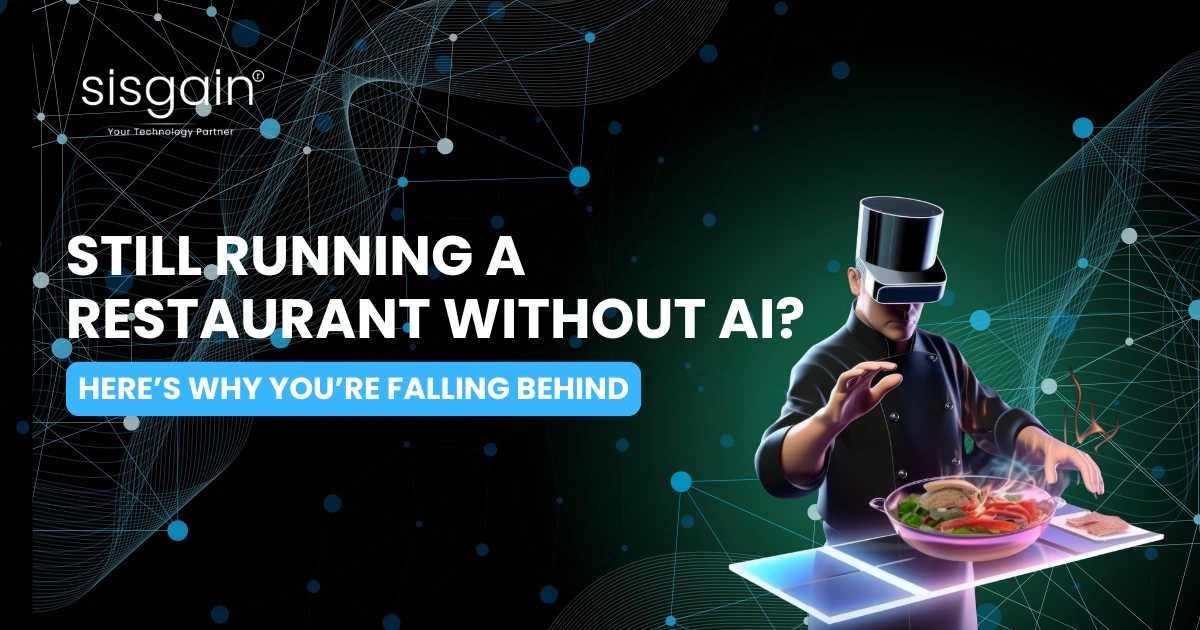
It’s a typical Friday night. Tables are full, the kitchen is under pressure, and orders are flowing in from dine-in, takeaway, and online platforms. In the middle of this rush, a few orders get delayed, one is entered incorrectly, and a high-demand dish runs out unexpectedly. By closing time, everything seems “normal” — but the reality is different. Revenue has quietly slipped through the cracks.
These small inefficiencies—missed orders, food wastage, and poor demand forecasting—are not isolated incidents. They happen daily across restaurants of all sizes. The problem is not always visible on the balance sheet, but over time, these operational gaps can cost businesses a significant portion of their profits.
Traditional systems, including many legacy POS Software for Restaurants, are often not equipped to handle real-time decision-making or predictive insights. This is where the shift begins. The adoption of artificial intelligence in restaurant industry is transforming how restaurants operate, helping them identify inefficiencies before they become losses.
Today, ai for restaurant operations is no longer limited to large chains. From optimizing inventory to predicting customer demand, ai in the restaurant industry is enabling smarter, faster, and more accurate decision-making—turning hidden losses into measurable gains.
Artificial intelligence in restaurant industry refers to the use of advanced data-driven systems that can analyze, learn, and make decisions to improve restaurant operations. Unlike traditional software that follows fixed rules, AI adapts based on patterns, behavior, and real-time data, making it far more effective in dynamic environments like restaurants.
In practical terms, AI is already being used in several critical areas. In ordering systems, it can automate and streamline order-taking through voice assistants or smart interfaces, reducing human error. In inventory management, AI tracks consumption patterns and predicts future demand, helping restaurants avoid overstocking or running out of key ingredients.
Customer personalization is another powerful application. AI analyzes past orders and preferences to recommend dishes, increasing both satisfaction and average order value. In the kitchen, AI-driven systems can optimize workflows by prioritizing orders, estimating preparation times, and improving coordination between staff.
The role of AI is rapidly evolving, and what was once considered innovative is quickly becoming essential. Today, it is clear that ai for restaurant operations is not a luxury anymore, but an operational necessity. Businesses that embrace ai in the restaurant industry are better positioned to scale efficiently, reduce costs, and deliver consistent customer experiences.
For restaurants looking to implement such systems effectively, partnering with experienced AI Development Firms ensures the right strategy, integration, and long-term success.
Behind every busy restaurant is a layer of operational complexity that often goes unnoticed—until it starts affecting revenue. Many restaurants still rely on manual processes or outdated systems that struggle to keep up with modern demand. While these methods may have worked in the past, they are increasingly becoming the reason for inefficiencies today.
Manual order handling is one of the most common issues. During peak hours, even a small mistake—wrong item entry, missed customization, or delayed communication with the kitchen—can lead to unhappy customers and wasted food. These errors are not just occasional; they compound over time.
Staffing is another challenge. Restaurants frequently face the dilemma of overstaffing during slow hours and being understaffed during rush periods. Without accurate forecasting, labor costs rise while service quality drops. Inventory mismanagement adds another layer of loss. Overstocking leads to food wastage, while understocking results in missed sales opportunities and customer dissatisfaction.
Long wait times and inconsistent service further damage the customer experience. A guest who waits too long or receives an inconsistent order is far less likely to return. Over time, these issues erode brand trust.
Industry estimates suggest that restaurants lose up to 10–15% of their revenue due to such inefficiencies. The challenge is not a lack of effort, but a lack of intelligent systems that can adapt in real time. This is where the limitations of traditional operations become clear—and why many restaurants are now turning toward smarter, data-driven solutions.

The shift toward AI-driven operations is not just a technological upgrade; it is a fundamental change in how restaurants function. By introducing intelligence into everyday processes, AI is helping restaurants move from reactive decision-making to proactive, data-backed strategies.
One of the most impactful areas is smart order management. AI-powered systems can handle multiple order channels—dine-in, online, and delivery—simultaneously without confusion. They reduce human error by automating order entry and ensuring accurate communication with the kitchen. For example, McDonald's has implemented AI-driven drive-thru systems that can understand voice orders and suggest items, significantly improving speed and accuracy.
Predictive inventory systems are another major advancement. Instead of relying on guesswork, AI analyzes historical sales data, seasonal trends, and even external factors like weather to forecast demand. This allows restaurants to maintain optimal stock levels, reducing both waste and stockouts. Domino's uses predictive analytics to anticipate ordering patterns, ensuring that popular items are always available when demand peaks.
Dynamic pricing models are also gaining traction. AI can adjust prices based on demand fluctuations, time of day, or customer behavior. This helps maximize revenue while staying competitive in a crowded market. Although still emerging in the restaurant space, this approach is already proving effective in increasing profit margins.
Customer experience is being transformed through personalization. AI systems track customer preferences, order history, and behavior to deliver tailored recommendations. Starbucks has successfully leveraged its AI-powered personalization engine to suggest products to customers through its app, increasing both engagement and average order value.
What ties all these advancements together is the ability of AI to continuously learn and improve. Unlike static systems, AI evolves with the business, becoming more accurate over time. Restaurants that adopt these technologies are not just improving efficiency—they are building a competitive advantage.
To implement these capabilities effectively, many businesses are investing in AI Automation & Workflow Solutions, which integrate seamlessly into existing operations and unlock the full potential of AI-driven transformation.
To understand the best ai tech for improving restaurant workflow, it’s important to look beyond features and focus on how these technologies function in a real operational environment. AI is not replacing systems like POS or kitchen displays—it is enhancing them with intelligence, automation, and predictive capabilities.
AI-powered POS systems are at the center of this transformation. Unlike traditional systems, they do more than process transactions. They analyze ordering patterns, identify peak hours, and even suggest upsell opportunities in real time. In a live restaurant setting, this means the system can guide staff during rush hours, reduce order errors, and streamline communication between the front and back of house.
Kitchen display systems (KDS) powered by AI take this a step further. Instead of showing orders in a static queue, AI prioritizes them dynamically based on preparation time, order complexity, and delivery deadlines. For example, if multiple orders come in at once, the system intelligently sequences them so that all dishes are ready simultaneously, reducing delays and improving service speed.
Demand forecasting tools are another critical component. These systems continuously analyze historical sales data, local events, weather conditions, and customer trends to predict what will be needed and when. Inside a real restaurant, this allows managers to prepare inventory and staff schedules in advance, avoiding last-minute chaos and unnecessary costs.
Voice AI ordering is also gaining traction, especially in drive-thrus and quick-service restaurants. Customers can place orders through conversational interfaces, which are processed instantly and accurately by the system. This reduces dependency on staff for order-taking and minimizes communication errors.
What makes these technologies truly effective is their ability to work together as part of a unified ecosystem. Restaurants that invest in High-Impact Machine Learning Solutions can connect these tools seamlessly, creating a workflow that is not only automated but also continuously optimized based on real-time data.
The kitchen is where operational efficiency directly impacts both cost and customer satisfaction. This is why ai solutions for restaurant kitchen efficiency are becoming a priority for restaurants aiming to scale without compromising quality.
One of the most valuable applications is order prioritization. AI systems analyze incoming orders and automatically arrange them based on urgency, preparation time, and service type (dine-in, takeaway, or delivery). This ensures that high-priority orders are completed on time while maintaining overall workflow balance. In practice, this reduces bottlenecks and keeps the kitchen running smoothly even during peak hours.
Cooking time prediction is another powerful capability. AI learns from past data to estimate how long each dish takes to prepare under different conditions. This helps kitchen staff manage expectations, coordinate multiple orders, and ensure consistency in service delivery. It also improves communication with front-of-house teams, leading to more accurate wait time estimates for customers.
Waste reduction is a major area where AI delivers measurable impact. By tracking ingredient usage and identifying patterns, AI systems can recommend optimal portion sizes and purchasing quantities. For instance, a mid-sized restaurant implemented AI-driven inventory tracking and reduced food waste by 22% within a few months. This not only lowered costs but also improved sustainability efforts.
Staff productivity tracking adds another layer of optimization. AI monitors workflow efficiency, identifies delays, and highlights areas where performance can be improved. Instead of relying on guesswork, managers gain clear insights into how their kitchen operates and where adjustments are needed.
Together, these technologies create a kitchen environment that is more predictable, efficient, and scalable. Rather than reacting to problems, restaurants can proactively manage operations—ensuring consistency, reducing waste, and delivering a better overall dining experience.

The impact of AI in the restaurant space is not theoretical—it is already delivering measurable results for global brands. What makes these case studies important is not just the scale at which they operate, but the practical insights they offer for businesses of all sizes.
|
Brand |
AI Implementation |
Result |
|
McDonald's |
AI drive-thru ordering |
Faster service time |
|
Domino's |
Predictive ordering |
Increased repeat customers |
|
Starbucks |
AI personalization |
Higher average order value |
These examples highlight a common pattern: AI is being used to solve specific operational challenges while directly improving revenue and customer experience. For instance, AI-powered drive-thru systems reduce order-taking time and minimize errors, leading to faster service and higher throughput. Predictive ordering ensures that high-demand items are always available, reducing missed sales opportunities. Personalization engines enhance customer engagement by offering relevant recommendations, which naturally increases spending.
What small and mid-sized restaurants can learn from this is not to replicate these systems at scale, but to adopt the underlying approach. Start by identifying one major inefficiency—whether it’s order accuracy, inventory control, or customer retention—and apply AI to solve that specific problem. Even a focused implementation can deliver noticeable ROI.
The key takeaway is that AI is not reserved for large enterprises. When applied strategically, it can help smaller restaurants achieve similar improvements in efficiency, consistency, and profitability.
One of the most common concerns for restaurant owners considering AI adoption is cost. While the investment can vary significantly, understanding the typical range helps set realistic expectations and plan effectively.
For small restaurants, basic AI solutions such as smart POS enhancements, demand forecasting tools, or chatbot ordering systems can cost between $5,000 and $20,000. Mid-sized restaurants looking for more integrated systems—combining inventory management, kitchen optimization, and customer analytics—can expect costs in the range of $20,000 to $75,000. Enterprise-level implementations, which include advanced automation, custom AI models, and multi-location integration, can exceed $100,000.
Several factors influence these costs. The complexity of the solution, level of customization, integration with existing systems, and the scale of operations all play a role. Additionally, ongoing maintenance, data management, and system upgrades should be considered as part of the total investment.
Despite the upfront cost, the return on investment is often realized within 6 to 12 months. This comes from reduced food waste, optimized staffing, improved order accuracy, and increased customer retention. In many cases, the savings generated by efficiency improvements alone can offset the initial investment.
By presenting a clear cost structure and realistic ROI timeline, restaurants can make informed decisions—approaching AI not as an expense, but as a strategic investment in long-term growth.
The next phase of ai in the restaurant industry is being shaped by technologies that go beyond automation and move toward intelligent, real-time decision-making. Restaurants are no longer just adopting AI—they are building entire operational strategies around it.
One of the most visible trends is the rise of AI voice assistants for ordering. These systems are becoming more conversational and accurate, handling complex orders without human intervention. Whether at drive-thrus or via phone, they reduce wait times and improve order precision.
Chat-based ordering systems are also expanding rapidly, especially on platforms like WhatsApp. Customers now expect seamless, instant ordering experiences without downloading multiple apps. This shift is why many businesses are realizing that Restaurant Chatbots Are No Longer Optional. With the right Chabot development, restaurants can automate customer interactions, handle queries, and process orders 24/7.
Inside the kitchen, computer vision is emerging as a powerful tool. AI-powered cameras can monitor food preparation, ensure quality standards, and even detect inefficiencies in workflow. This level of visibility was not possible with traditional systems.
Another important development is AI-powered customer sentiment analysis. By analyzing reviews, feedback, and social media interactions, AI can identify patterns in customer satisfaction and highlight areas that need improvement. This allows restaurants to act proactively rather than reactively.
These innovations are part of broader AI trends that are redefining how restaurants operate. Businesses that stay aligned with these advancements will be better positioned to adapt, compete, and grow in an increasingly data-driven industry.
While the benefits of AI are significant, adoption is not without its challenges. One of the primary concerns for restaurant owners is the initial investment. Even though AI delivers long-term ROI, the upfront cost can feel substantial, especially for small and mid-sized businesses.
Staff training is another critical factor. Introducing AI systems requires employees to adapt to new workflows and tools. Without proper training, even the most advanced technology can fail to deliver expected results.
Integration with existing systems can also be complex. Many restaurants still rely on legacy software that may not easily connect with modern AI solutions. This can lead to delays, additional costs, and operational disruptions during implementation.
Data dependency is another important consideration. AI systems rely heavily on accurate and consistent data. If the input data is incomplete or inconsistent, the output will be unreliable, which can impact decision-making.
Being aware of these challenges allows restaurants to plan more effectively and approach AI adoption with realistic expectations, ultimately increasing the chances of success.
Selecting the right AI solution starts with clarity. Instead of adopting technology for the sake of innovation, restaurants should first define the specific problem they want to solve—whether it is reducing food waste, improving order accuracy, or enhancing customer experience.
Scalability is another key factor. The chosen solution should not only address current needs but also support future growth. As the restaurant expands, the technology should be able to adapt without requiring a complete overhaul.
Integration capabilities are equally important. AI systems should work seamlessly with existing tools such as POS, inventory management, and customer databases. Poor integration can create more inefficiencies rather than solving them.
Finally, working with experienced AI Development Firms can make a significant difference. The right partner brings not only technical expertise but also industry understanding, ensuring that the solution is aligned with real operational needs.
A thoughtful, problem-first approach helps restaurants invest in AI solutions that deliver measurable and sustainable results.

The restaurant industry is evolving rapidly, and the margin for inefficiency is shrinking. What once worked as a manual, experience-driven business is now becoming a data-driven ecosystem where precision, speed, and personalization define success.
Artificial intelligence is at the center of this transformation. It is helping restaurants move from reactive problem-solving to proactive decision-making, improving every aspect of operations—from the kitchen to customer engagement.
The reality is clear: AI is not replacing restaurants, it’s replacing inefficient ones. Businesses that continue to rely solely on traditional methods risk falling behind, not because they lack effort, but because they lack the tools to compete in a modern landscape.
At the same time, adopting AI does not require an overnight transformation. Even small, focused implementations can deliver meaningful results. The key is to start with a clear objective and build from there.
Restaurants that embrace AI today are not just solving current challenges—they are preparing for a future where efficiency, consistency, and customer experience will determine long-term success.

Start Build Your
Next Digital Solution?
Let’s build scalable, future-ready digital solutions tailored to your business goals. Connect with our experienced technology consultants to discuss your vision, strategy, and growth opportunities — with zero obligation and complete transparency.
Get a free consultation and cost estimate for your digital solution
Our expert will contact you within 24 hours. Check your email for confirmation.
Partner with SISGAIN experts to build secure, scalable AI-powered IT Solutions that transform your business operations.









DUQE FREEZONE Quarter Deck, Queen Elizabeth 2, Mina Rashid, Dubai, UAE

100 Consilium Pl Suite 200, Scarborough, ON M1H 3E3, Canada

C-109, Sector 2, Noida, Uttar Pradesh 201301 India
Project quotes, partnerships, implementation
Open roles, referrals, campus hiring